
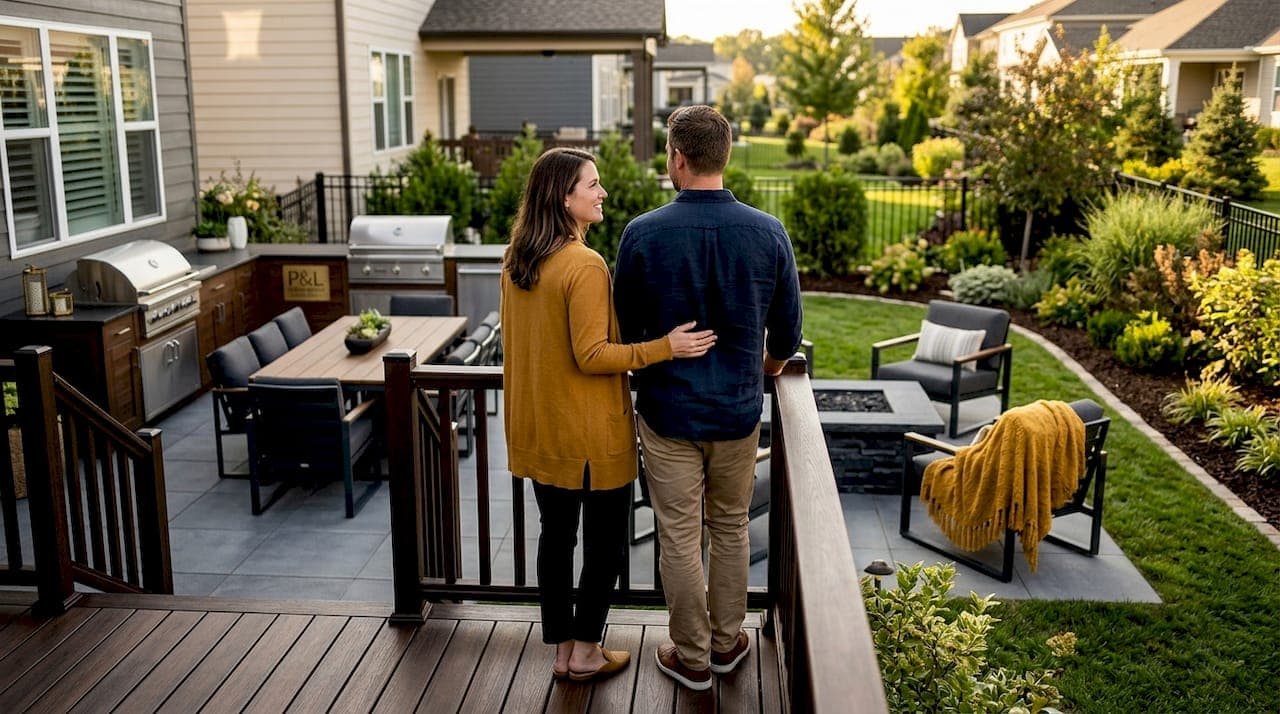
Most backyards sit underused because there is no plan. You have a patch of grass, maybe a grill in the corner, and a few chairs scattered around with no clear purpose. This backyard entertainment zone layout guide changes that. You will learn how to divide your outdoor space into functional zones, choose the right features, avoid design mistakes that hurt property value, and create an area your family and guests will actually want to spend time in. The process is more straightforward than most homeowners expect, and the results are worth every bit of planning effort.
Table of Contents
- Key Takeaways
- Your backyard entertainment zone layout guide starts here
- How to plan and set up your backyard entertainment zones
- Design choices that protect and grow your property value
- Executing your layout for comfort and year-round use
- Maintaining and evolving your backyard over time
- My take on what actually makes backyard zones work
- How Ploutdoorva can bring your backyard vision to life
- FAQ
Key Takeaways
| Point | Details |
|---|---|
| Use the 60/20/20 rule | Allocate 60% open space, 20% hardscape, and 20% planting for a balanced outdoor layout. |
| Zone by function | Separate cooking, dining, lounging, and play areas to reduce clutter and improve flow. |
| Avoid over-paving | Mixing hardscape with greenery can increase property value by up to 12%. |
| Layer your lighting | Task, ambient, and accent lighting work together to make your space safe and inviting after dark. |
| Plan for flexibility | Design zones that can adapt as your family's needs and usage patterns change over time. |
Your backyard entertainment zone layout guide starts here
The most effective outdoor entertainment layouts share one thing: intentional zoning. Instead of treating your backyard as one open area where everything competes for space, you divide it into distinct zones that each serve a clear purpose. Think of it the way you think about your home's interior. Your kitchen, living room, and dining room all connect, but each has a defined role. Your backyard should work the same way.
Organizing your yard into zones by function, such as cooking, dining, lounging, and wellness, creates efficient, uncluttered spaces where sightlines and utility align naturally. The result is a backyard that feels larger, more polished, and far more enjoyable to use.
The 60/20/20 rule explained
A reliable starting point for any outdoor entertainment layout is the 60/20/20 rule: 60% of your yard stays as open lawn or flexible space, 20% becomes hardscape such as patios, paths, and decking, and 20% goes to planting beds and greenery.
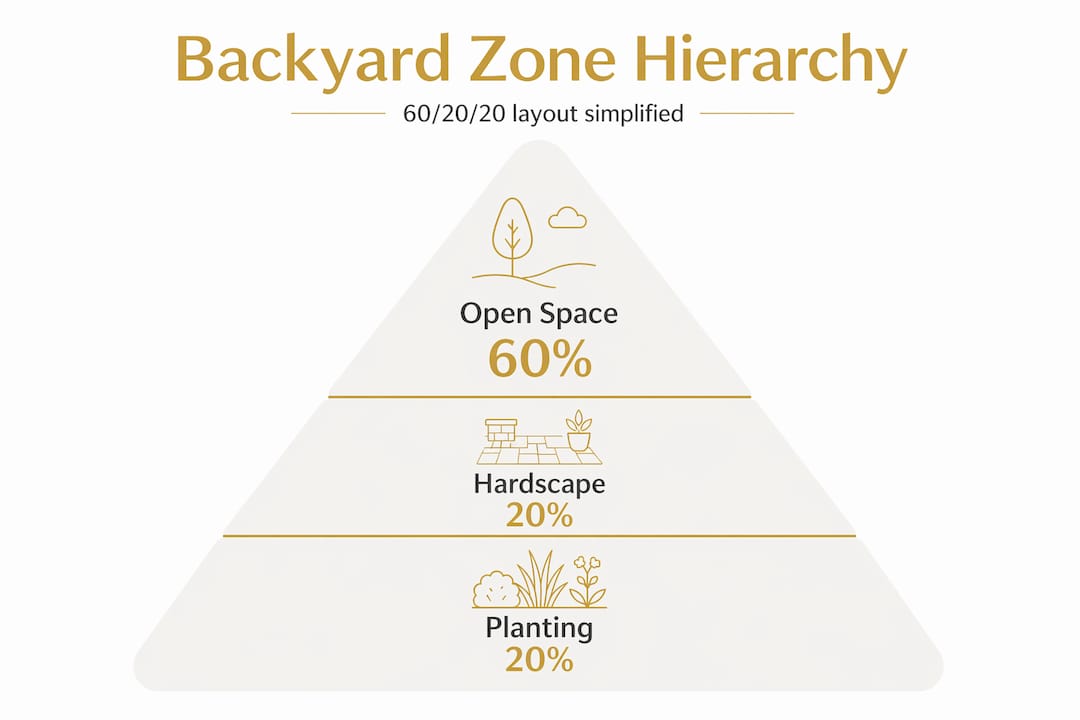
Here is how each zone type typically functions in a well-planned backyard:
| Zone type | Primary purpose | Typical allocation |
|---|---|---|
| Open lawn / flexible space | Play, gathering, visual breathing room | 60% |
| Hardscape | Patios, paths, fire pit areas, kitchen slabs | 20% |
| Planting beds | Borders, privacy screening, aesthetics | 20% |
You can adjust these percentages based on your priorities. If you entertain large groups regularly, shifting to 30% hardscape and reducing open lawn makes sense. If you have young children who need room to run, protect that open space. The rule gives you a framework, not a rigid formula.
The four core zones most homeowners need are:
- Transition zone: The path from your home to the backyard, including steps, doors, and entry areas
- Activity zone: Where cooking, dining, and social gathering happen
- Garden or planting zone: Beds, borders, and greenery that frame the space
- Buffer zone: Screening plants, fences, or structures that create privacy and define edges
Getting these four zones right creates a backyard that flows naturally from one area to the next without feeling fragmented.
How to plan and set up your backyard entertainment zones
Planning before you build saves you money and prevents regret. Follow this sequence to set up your backyard entertainment zones with confidence.
-
Measure and map your space. Walk your yard with a tape measure and sketch a rough overhead view. Note where your home's doors and windows sit, where existing trees or structures stand, and where the sun falls at different times of day. Morning shade in a dining area is a bonus. Afternoon sun beating down on a lounging zone is a problem.
-
Identify your priorities. Are you focused on hosting dinner parties? Do your kids need a dedicated play area? Do you want a quiet wellness corner? Write down your top three uses for the space before you place anything on paper.
-
Map your zones. Assign each function a location based on sun exposure, proximity to your home, and traffic flow. Place your outdoor kitchen close to the house for easy access to utilities. Put the dining zone adjacent but not directly beside the grill. Position the lounging area where it catches the best light or shade depending on your climate.
-
Choose materials with cohesion in mind. Pick two or three materials and stick with them across the entire space. Mixing too many textures, such as brick, concrete, wood, and stone all in one yard, creates visual noise. A consistent palette ties zones together and makes the space feel designed rather than assembled.
-
Plan your lighting from the start. Layered lighting transforms a patio into a vibrant entertainment area after dark. Task lighting goes over cooking and prep surfaces. Ambient lighting covers dining and lounging areas. Accent lighting highlights plants, pathways, and architectural features. Wiring for lighting during construction is far cheaper than retrofitting later.
-
Add pathways that guide movement. Paths should connect zones naturally, directing guests from the door to the dining area, from dining to the fire pit, and so on. Use the same hardscape material as your patio where possible for visual continuity.
Pro Tip: Observe your yard at three different times of day before finalizing zone placement. Morning, midday, and late afternoon light patterns will reveal the best spots for dining, lounging, and play far more clearly than any design software.
Design choices that protect and grow your property value
Not every backyard upgrade adds value. Some popular choices actually reduce what a buyer would pay for your home. Knowing the difference protects your investment.
The biggest mistake homeowners make is over-paving. Covering large portions of your yard with concrete feels practical, but it creates a space that feels institutional and hot in summer. Replacing excessive concrete with a mix of hardscape and greenery can increase property value by up to 12%. Buyers respond to balance. A yard that is all patio signals low maintenance at the cost of livability.
Plant selection matters more than most homeowners realize. Clean edges, defined plant beds, and a few statement native plants create stronger positive impressions than overgrown or mismatched vegetation. Native species require less water, less pruning, and less intervention overall. They signal that the yard is well-considered, not just filled in.
When it comes to backyard entertainment features like fire pits and water features, installation quality is everything. Professional fire and water feature installations can increase property value by up to 15%. Poorly executed DIY versions can reduce it significantly, both through safety concerns and aesthetic problems that buyers notice immediately.
A few additional design principles worth following:
- Avoid overly personalized permanent features. A putting green or a themed tiki bar may suit your taste perfectly but will narrow your buyer pool if you ever sell.
- Keep structures proportional to your yard size. An oversized pergola in a small yard feels oppressive. Scale matters.
- Choose furniture and decor that complement your home's architectural style. Rustic wood furniture looks out of place against a modern stucco exterior.
Pro Tip: Before committing to any permanent hardscape feature, look at your home's resale potential in your neighborhood. In higher-value markets, outdoor kitchens and fire features return well. In entry-level neighborhoods, simpler improvements often yield better percentage returns.
Executing your layout for comfort and year-round use
Getting the design right on paper is only half the work. How you execute it determines whether the space actually gets used.
Seating and social flow
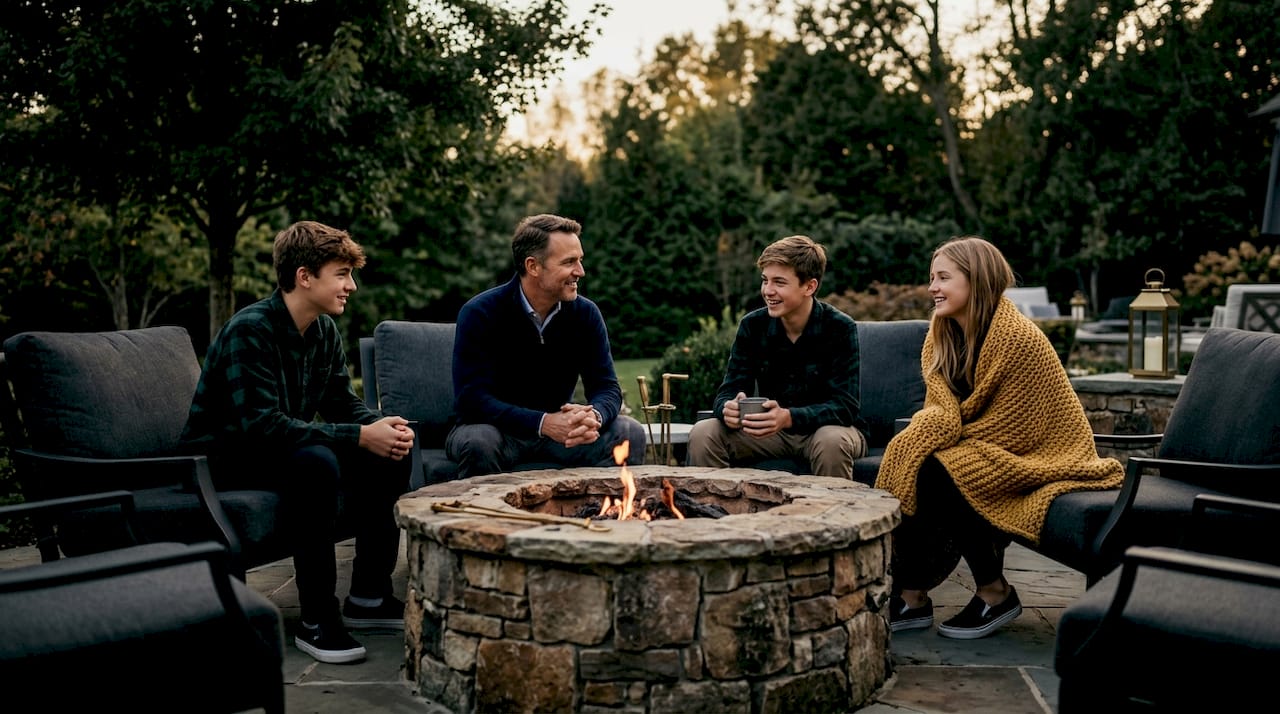
Arrange seating in a U-shape or partial circle around a focal point, whether that is a fire pit, a water feature, or a view. This configuration encourages conversation naturally. Rows of chairs facing one direction work for watching a screen but shut down social interaction at a gathering.
Climate control
Outdoor comfort depends heavily on managing heat and cold. For heating, skip portable propane mushroom heaters. Infrared heaters heat people directly rather than the surrounding air, which makes them far more effective in breezy conditions. Mount them overhead in covered areas for the best coverage. For cooling, ceiling fans in covered patios move air efficiently and draw far less power than portable units.
Outdoor kitchen workflow
If your layout includes an outdoor kitchen, apply the same work triangle principle used in interior kitchen design. Your grill, prep surface, and refrigeration should form a triangle with no leg longer than nine feet. This keeps cooking efficient and prevents the cook from constantly walking back and forth. Position your grill so you face your guests while cooking and so smoke drifts away from the dining area rather than toward it.
Pro Tip: Install a small outdoor sink even if your kitchen setup is modest. Running water at the grill station eliminates more trips back inside than any other single addition, and it keeps food prep sanitary.
Pathway and lighting execution
Pathways should be at least 36 inches wide for comfortable single-file movement and 48 to 60 inches for two people walking side by side. Use landscape lighting along path edges to guide movement safely at night without flooding the space with harsh light. Step lights, low bollards, and in-ground path markers all work well here.
Maintaining and evolving your backyard over time
A well-designed backyard stays functional only with consistent upkeep and the willingness to adapt as your needs change. If you have a messy backyard right now, start with clearing and defining edges before adding any new features.
Routine maintenance practices that protect your investment:
- Sweep and rinse hardscape surfaces monthly to prevent staining and moss buildup
- Trim plant bed edges every four to six weeks to maintain clean lines
- Inspect lighting fixtures and replace bulbs at the start of each season
- Check furniture for rust, rot, or UV damage each spring before the season begins
Seasonal adjustments keep your space usable year-round. Store or cover upholstered furniture in winter. Add outdoor rugs and throw blankets in fall to extend the lounging season. Bring in potted plants that define zone edges during warmer months and replace them with weather-resistant planters in winter.
As your family grows or changes, your zones should shift too. A play area for young children can convert to a garden bed or an additional seating zone as kids get older. Build flexibility into your layout from the start by avoiding permanent structures in areas that may need to change.
Pro Tip: Take a photo of your backyard from the same spot at the start of each season. Reviewing these over a year shows you exactly which zones get used, which sit empty, and where your next improvement should go.
My take on what actually makes backyard zones work
I have seen hundreds of backyard projects, and the homeowners who end up happiest are almost never the ones who packed in the most features. They are the ones who committed to a clear plan and resisted the urge to add one more thing.
The biggest misconception I encounter is that a larger open space is more flexible. In practice, one big undivided lawn just becomes a space no one knows how to use. Multi-zone planning gives every area a reason to exist, and that clarity is what gets people outside consistently.
Lighting is the most underestimated part of any outdoor entertainment layout. I have watched beautifully designed spaces sit empty after 7 p.m. simply because there was no lighting plan. Conversely, I have seen modest patios become the most-used room in the house once layered lighting was added. The investment pays off every single evening you spend outside.
My honest advice: get professional input on your layout before you pour a single yard of concrete. Mistakes in hardscape are expensive to fix. A well-drawn plan, especially one with a 3D rendering, shows you problems before they become permanent. You do not have to hand over the whole project. Even a single design consultation can save you from costly decisions you would regret.
— Victor
How Ploutdoorva can bring your backyard vision to life
Designing a backyard entertainment zone that works for your family takes more than good intentions. It takes precise planning, the right materials, and experienced execution. Ploutdoorva specializes in exactly this kind of work, from initial zone planning through complete construction, all at a fixed price with no hidden costs. Every project starts with a free 3D landscape design so you can see your layout before a single shovel hits the ground. If you are ready to move from ideas to a real plan, explore Ploutdoorva's complete backyard build services or connect with an outdoor living contractor who will walk your property, listen to your goals, and build something you will actually use.
FAQ
What is the 60/20/20 rule for backyard design?
The 60/20/20 rule divides your yard into 60% open lawn or flexible space, 20% hardscape such as patios and paths, and 20% planting beds. You can adjust the percentages based on your entertainment priorities.
How far should the grill be from the dining area?
Your grill should sit close enough for the cook to interact with guests but positioned so smoke drifts away from the dining zone. A separation of eight to twelve feet with attention to prevailing wind direction works well for most yards.
What backyard features add the most property value?
Professional installations of fire features and water features can boost property value by up to 15%. Balanced landscaping that mixes hardscape with greenery also adds value, while over-paving and overly personalized features tend to reduce it.
How many zones does a backyard entertainment area need?
Most family-friendly outdoor spaces benefit from four core zones: a transition area near the home entrance, an activity zone for cooking and dining, a planting zone for greenery and privacy, and a buffer zone for screening. Larger yards can add wellness or play zones on top of these.
What type of heater works best for outdoor entertaining?
Infrared heaters outperform portable propane mushroom heaters for outdoor use because they heat people directly rather than the surrounding air. This makes them effective even in breezy conditions, which is where most portable heaters fail.