
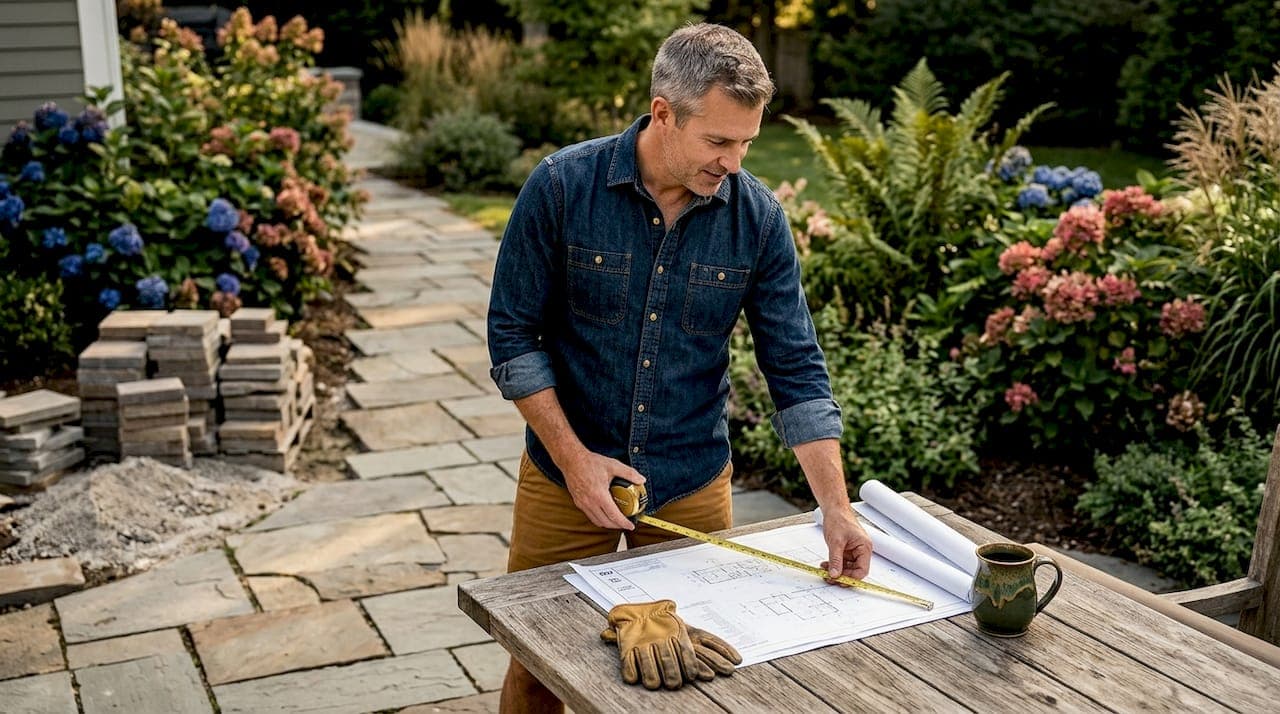
If you've ever requested a quote for a backyard patio or outdoor kitchen and felt confused by the numbers, you're not alone. Understanding how outdoor projects are priced is one of the most valuable things you can do before committing to any landscaping or construction investment. Costs for similar projects can vary by tens of thousands of dollars depending on materials, labor, site conditions, and contractor practices. This guide breaks down every major pricing factor so you can budget with confidence, compare bids accurately, and avoid the surprises that push projects over budget.
Table of Contents
- Key takeaways
- How outdoor projects are priced: the core cost drivers
- Pricing models and how contractors quote projects
- Hidden costs and how to avoid budget surprises
- How to get and compare outdoor contractor bids
- Budgeting and financing your outdoor project
- My honest take on pricing transparency
- Get transparent pricing for your outdoor project
- FAQ
Key takeaways
| Point | Details |
|---|---|
| Pricing has multiple layers | Material, labor, permits, and overhead all contribute to your final outdoor project cost. |
| Flat-price quotes offer clarity | Fixed-price contracts protect you from open-ended cost exposure during construction. |
| Hidden costs are predictable | Site drainage, permits, and waste removal are common additions you can plan for in advance. |
| Always get 3 to 5 quotes | Comparing multiple bids helps you benchmark fair pricing and spot incomplete estimates. |
| Budget a contingency fund | Set aside 15 to 25 percent above your base estimate to cover unexpected expenses. |
How outdoor projects are priced: the core cost drivers
When you ask how outdoor projects are priced, the honest answer is that no single factor determines the number on your quote. Contractors build estimates from several cost layers, and each one can shift significantly depending on your specific project.
Materials are usually the most visible line item. The type and quality you choose matter enormously. A basic concrete patio costs far less per square foot than a natural stone or porcelain tile installation. Landscaping projects average around $3,517 but can range from $200 to $14,875, while specialized builds like outdoor kitchens run from $5,060 to $40,755. That spread reflects material selection more than anything else.
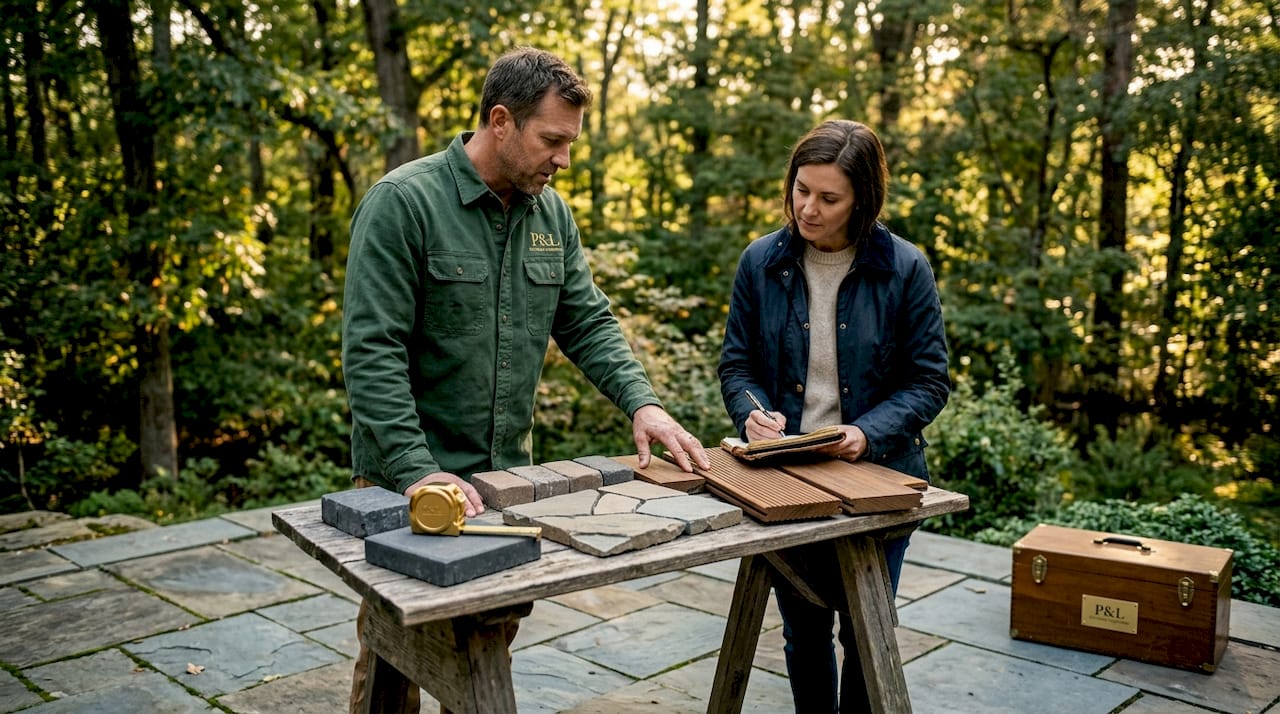
Labor is the second major driver, and it's more complex than most homeowners realize. A contractor's labor rate isn't just the worker's hourly wage. Loaded labor rates must include wages, payroll taxes, workers' compensation insurance, paid idle time, and a share of office overhead. A crew member earning $25 per hour may actually cost a contractor $40 to $50 per billable hour once all those burdens are factored in.
Beyond materials and labor, several other components shape your final price:
- Site preparation: Grading, excavation, and clearing existing vegetation add cost before any visible work begins.
- Equipment: Skid steers, compactors, and specialty tools are either rented or owned, and that cost gets passed to your project.
- Permits and inspections: Required for most structural builds, permits add both fees and scheduling time.
- Design fees: 3D renderings, site plans, and engineering reviews are sometimes included and sometimes billed separately.
- Project complexity: Sloped terrain, limited access, or unusual shapes require more labor hours and specialized equipment.
Pro Tip: Ask every contractor to separate their material and labor costs on the estimate. If they refuse or can't provide that breakdown, treat it as a warning sign about their pricing transparency.
Pricing models and how contractors quote projects
Understanding how outdoor contractors quote projects helps you read bids more accurately. There are three main approaches contractors use, and each has different implications for your budget.
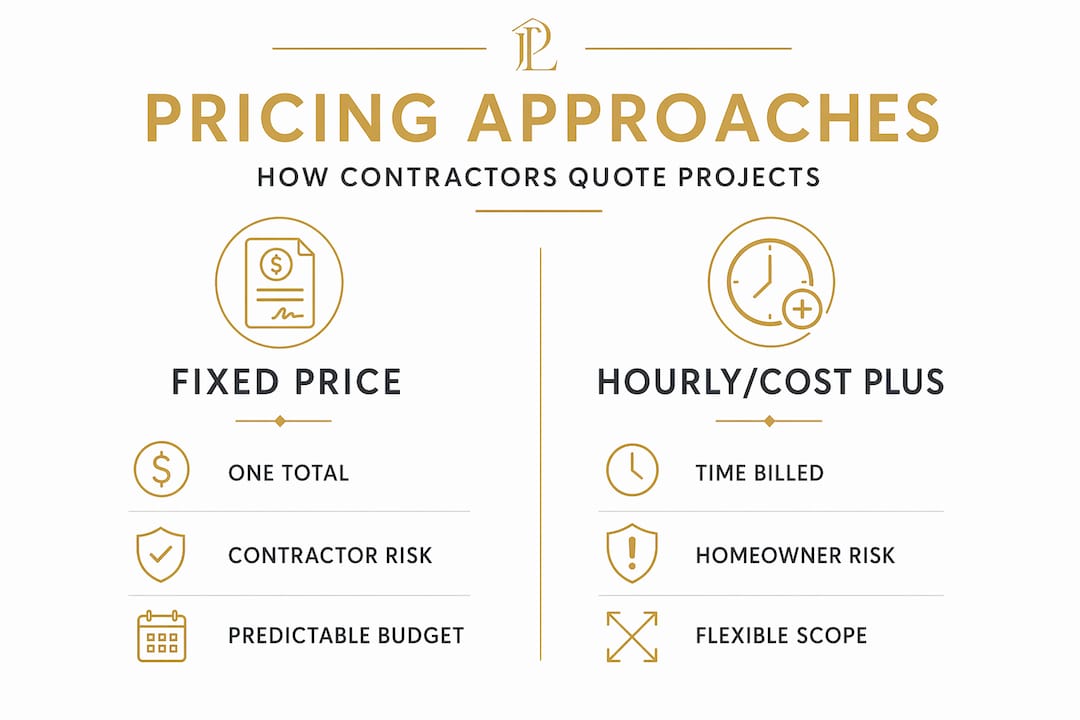
Flat-price (fixed-price) contracts give you one number for the entire scope of work. The contractor absorbs cost overruns on their end, which protects you from surprise invoices. This model requires a clearly defined scope upfront, but it offers the most predictability for homeowners.
Hourly pricing charges you for actual time spent on site. This works well for small, undefined tasks but can become expensive quickly on larger projects if productivity is slower than expected.
Unit pricing charges per measurable unit, such as price per square foot of paving or price per linear foot of retaining wall. It's common in landscaping and makes scaling a project up or down straightforward.
Here's what a properly detailed written estimate should always include:
- A clear scope of work with specific materials listed by name and grade
- A project timeline with start and estimated completion dates
- Payment schedule tied to construction milestones
- Warranty terms for both materials and workmanship
- Explicit exclusions so you know what is NOT covered
- Permit responsibilities and who handles the applications
Winning estimates include scope clarity, timeline, payment terms, warranty, and options or alternatives to help you make decisions. A contractor who provides all of this isn't just being thorough. They're demonstrating that they understand the project fully.
One thing many homeowners don't realize: overhead costs like insurance, fuel, equipment maintenance, and administrative time are built into every legitimate quote. A bid that seems unusually low often means these costs were left out, not that the contractor is more efficient. Those costs will show up eventually, either as change orders or as cut corners.
Pro Tip: Request that your contractor provide two or three material options at different price points. A reputable contractor will walk you through the trade-offs rather than just pushing the most expensive choice.
Hidden costs and how to avoid budget surprises
Hidden costs are not random bad luck. They are structural realities that typically emerge during site preparation, and you can plan for most of them before breaking ground.
The most common hidden costs outdoor projects generate include:
- Drainage corrections: Poor grading or clay-heavy soil may require French drains or regrading that wasn't visible during the initial walkthrough.
- Soil conditions: Rocky subsoil, tree roots, or unstable fill material can significantly increase excavation time and cost.
- Permit delays: If permits take longer than expected, contractors may charge holding fees or reschedule crews, adding to your total.
- Waste removal: Demolishing an old concrete pad or removing overgrown landscaping generates debris that must be hauled away, often at a separate cost.
- Utility conflicts: Underground irrigation lines, gas pipes, or electrical conduit discovered during excavation require rerouting.
- Material substitutions: Supply chain issues can make your selected material unavailable mid-project, forcing upgrades or delays.
Hidden costs such as site drainage, structural issues, and permit fees commonly add 15 to 30 percent above initial quotes. The standard advice is to set aside a contingency fund of 15 to 25 percent of your project budget. Older properties or projects involving significant excavation should lean toward the higher end of that range.
"Hidden costs are not unpredictable. They are structural realities that typically emerge during site preparation and warrant a dedicated contingency fund." — Hello Lovely Living
The best way to minimize surprises is to ask your contractor directly: "What conditions on this site could change the price, and what would trigger a change order?" A contractor who gives you a specific, thoughtful answer has done this before. One who says "nothing should come up" hasn't.
How to get and compare outdoor contractor bids
Getting accurate bids starts before you contact a single contractor. The clearer your project scope, the more comparable your quotes will be. Vague requests produce vague estimates, and you end up comparing apples to oranges.
Here's what to prepare before requesting bids:
- A written description of what you want built, including dimensions if possible
- Any photos or inspiration images that communicate your style preferences
- Your preferred materials or a note that you're open to recommendations
- Your target timeline and any hard deadlines
- Your approximate budget range
With that information ready, contractors recommend obtaining 3 to 5 detailed, itemized quotes. This gives you enough data to identify the market rate for your project and spot outliers.
Use this comparison framework when reviewing bids:
| What to check | What to look for |
|---|---|
| Scope of work | Does it match exactly what you requested? |
| Material specifications | Are specific products and grades listed? |
| Labor breakdown | Are hours or crew size mentioned? |
| Permit inclusion | Who pulls permits and who pays for them? |
| Payment schedule | Are payments tied to milestones or just dates? |
| Warranty terms | What is covered and for how long? |
A quote that is 25 to 30 percent lower than the others is not a deal. It's a signal that something was left out of the scope, inferior materials were assumed, or change orders are planned after you sign. Detailed written estimates close at 2 to 3 times the rate of vague verbal pricing, and that's because they give homeowners the confidence to say yes. When you're comparing bids, reward the contractor who gives you the most information, not the lowest number.
You can also learn more about evaluating contractor bids specifically for Virginia homeowners to understand what local licensing and insurance requirements should look like on a legitimate quote.
Budgeting and financing your outdoor project
Once you understand outdoor project cost estimation, the next step is building a realistic budget. Start with your desired outcome and work backward. A basic patio may fit a $10,000 budget. A full outdoor kitchen with a pergola, lighting, and seating area could reach $40,000 or more depending on materials and complexity.
Set your target number, then add your contingency fund on top. Don't fold the contingency into your base budget. Keep it separate so you're not tempted to spend it on upgrades before the project is complete.
Material prices trend upward over time, and project delays increase overall costs. Starting sooner rather than later, and locking in a fixed-price contract, protects you from inflation. If your budget is tight, explore financing options that let you spread payments over time while locking in today's material costs.
Payment schedules matter too. Avoid any contractor who asks for more than 30 to 40 percent upfront. Legitimate payment structures tie installments to completed milestones, not arbitrary dates.
Pro Tip: If your budget doesn't cover your full vision, ask your contractor to phase the project. Build the structural elements now and add finishing features like lighting or built-in seating in a later phase. This is far better than cutting quality to fit everything into one budget.
My honest take on pricing transparency
I've worked with enough homeowners to know that the pricing conversation is where most outdoor projects go sideways. Not because contractors are dishonest, but because both sides often avoid the uncomfortable specifics until it's too late.
In my experience, the homeowners who end up happiest are the ones who asked the most questions upfront. They wanted to know exactly what was included, what could change the price, and what the warranty actually covered. Those conversations feel awkward in the moment, but they prevent real problems later.
The misconception I encounter most often is that a detailed, higher quote means the contractor is overcharging. In reality, a thorough estimate reflects a contractor who has actually thought through your project. The low bid usually means someone didn't account for the full scope or is planning to recover margin through change orders.
I've seen projects where a homeowner saved $3,000 upfront by choosing the lowest bid, then spent $7,000 in change orders before the job was done. That's not a coincidence. It's a pattern. When you shop for outdoor projects, price transparency is the most reliable indicator of contractor quality. Demand it from the start.
— Victor
Get transparent pricing for your outdoor project
If you've been putting off your backyard project because the pricing felt unclear or unpredictable, Ploutdoorva was built to solve exactly that problem.
Ploutdoorva (P&L Outdoor Solutions) provides fixed-price contracts with no hidden costs, free 3D design renderings, and on-site owner supervision from start to finish. Every estimate breaks down materials, labor, and permits so you know exactly what you're paying for before any work begins. Their two-year workmanship warranty and perfect 5.0 Google rating reflect a consistent track record of completing projects on time and on budget.
Whether you're planning a patio, an outdoor kitchen build, or a full outdoor living space, Ploutdoorva offers the kind of detailed, honest quoting process this article describes. Contact their team through the outdoor living contractor page to schedule a consultation and get a quote you can actually trust.
FAQ
What are the main factors that affect outdoor project pricing?
Material type and quality, labor rates, site conditions, permits, and project complexity are the primary cost drivers. Each factor can shift your total significantly, which is why two similar-looking projects can carry very different price tags.
How do I avoid hidden costs on outdoor projects?
Ask your contractor to identify site-specific risks before signing, and set aside a contingency fund of 15 to 25 percent of your total budget. Common hidden costs include drainage corrections, permit delays, waste removal, and utility conflicts discovered during excavation.
How many quotes should I get for an outdoor project?
Get 3 to 5 detailed, itemized quotes from licensed contractors. This gives you a reliable benchmark for fair pricing and helps you identify bids that are suspiciously low or missing key scope items.
What should a contractor's written estimate include?
A proper estimate should list specific materials by name and grade, a project timeline, a milestone-based payment schedule, warranty terms, permit responsibilities, and explicit exclusions. Anything less leaves you exposed to unexpected charges.
Why do outdoor projects go over budget?
The most common reasons are incomplete initial scopes, unexpected site conditions, material substitutions, and permit delays. Choosing a fixed-price contract and maintaining a contingency fund are the two most effective ways to protect your budget from these issues.