
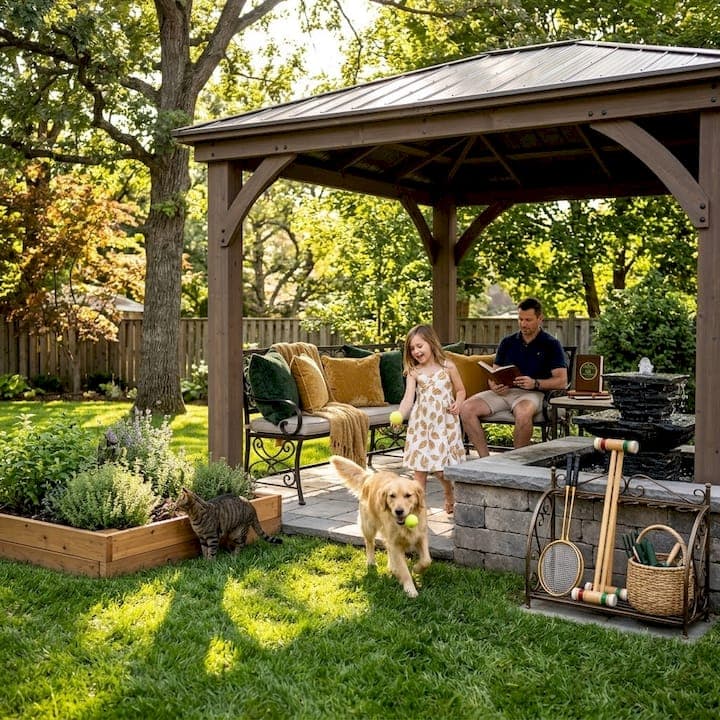
Your backyard should work for every member of your household, including the four-legged ones. Yet most pet owners find themselves stuck between a yard that looks great and one that actually serves their pets' daily needs. The real challenge is that pet-friendly backyard features require you to think about safety, behavior, durability, and aesthetics all at once. Get one wrong and you end up with a dog who digs through your flower beds or a cat who has nowhere safe to roam. This guide gives you a clear, zone-by-zone framework to plan your outdoor space with confidence.
Table of Contents
- Key takeaways
- 1. The 7-zone framework for pet-friendly backyard features
- 2. Secure fencing and perimeter design
- 3. Choosing the right ground surfaces
- 4. Dedicated dig zones
- 5. Dog wash stations
- 6. Pet-safe plants and plant buffers
- 7. Shade structures and cooling features
- 8. Tailored features by pet type and climate
- My honest take on what actually works
- Ready to build your pet-friendly backyard?
- FAQ
Key takeaways
| Point | Details |
|---|---|
| Use the 7-zone framework | Divide your yard into lounge, run, dig, shade, water, perimeter, and plant buffer zones for a functional layout. |
| Match surfaces to your pet | Artificial turf, pea gravel, and pavers each carry different safety and maintenance tradeoffs depending on breed and climate. |
| Secure fencing prevents escapes | Dig-proof foundations and breed-matched fence heights are non-negotiable for backyard safety. |
| Avoid toxic mulch and plants | Cocoa bean mulch and many common ornamentals are dangerous to pets; always verify plant safety before installing. |
| Design for behavior, not just looks | A well-planned environment makes pet management easier and reduces destructive habits without extra training effort. |
1. The 7-zone framework for pet-friendly backyard features
The single most effective way to design a pet-friendly yard is to stop thinking about it as one open space. The 7-zone design framework divides your yard into distinct functional areas: lounge, run, dig, shade, water, perimeter, and plant buffer. Each zone addresses a specific natural behavior your pet has, which means less conflict between what your pet wants to do and what you want your yard to look like.
Here is what each zone does in practice:
- Lounge zone: A shaded, comfortable resting area with soft ground cover or a raised pet bed platform
- Run zone: An open, clear path where dogs can sprint freely without obstacles
- Dig zone: A designated sand or soil pit that redirects digging instincts away from garden beds
- Shade zone: Tree canopy, pergola coverage, or shade sail placement timed for peak afternoon sun
- Water zone: Automatic waterers, splash pads, or a shallow pool for hydration and cooling
- Perimeter zone: Secure fencing with dig-proof foundations and appropriate height for your breed
- Plant buffer zone: A physical and visual separation between pet zones and delicate plantings
Pro Tip: Map your zones on paper before you buy a single material. Knowing where your run zone ends and your plant buffer begins will save you from costly redesigns later.
2. Secure fencing and perimeter design
No pet-friendly backyard design guide is complete without addressing the perimeter first. A yard with beautiful features means nothing if your dog can escape through a gap or dig under a fence panel.
Secure fencing should address four specific vulnerabilities: digging, climbing, jumping, and gate gaps. For digging, concrete aprons or hardware cloth buried 12 inches underground along the fence line are the most reliable deterrents. For climbers and jumpers, solid wood or vinyl panels with no horizontal footholds work far better than chain link. Gate latches should be double-action or padlocked, because dogs learn single-lever latches faster than most owners expect.
Fence height depends on breed. A 4-foot fence works for small breeds, but large or athletic dogs need 6 feet minimum. Some breeds, like Siberian Huskies or Belgian Malinois, require 8-foot enclosures or coyote roller attachments at the top.
3. Choosing the right ground surfaces
Ground surface selection is where most pet owners make their biggest mistakes. The material under your pet's paws affects heat exposure, allergen load, paw abrasion, and your own maintenance schedule every single week.
Here is a direct comparison of the five most common options:
| Surface | Paw safety | Maintenance | Allergen risk | Heat retention | Best for |
|---|---|---|---|---|---|
| Natural grass | Good when healthy | High (mowing, fertilizing) | Moderate | Low | Mild climates, low-traffic yards |
| Artificial turf | Risk in full sun | Low | Low | High | Allergy-prone dogs with shade coverage |
| Pea gravel | Good | Low | Low | Low | Dogs with skin sensitivities |
| Decomposed granite | Moderate | Low | Low | Moderate | Dry climates, large yards |
| Concrete/pavers | Good with texture | Very low | Very low | High | High-traffic zones, wash stations |
Artificial turf in full sun poses a real paw burn hazard in USDA zones above 7, especially between 10 a.m. and 4 p.m. If you install turf, shade coverage during those hours is not optional. It is a safety requirement.
Grassless yard options like pea gravel and decomposed granite are particularly valuable for dogs with allergies or sensitive skin, and they eliminate the need for fertilizers and pesticides entirely.
For a detailed breakdown of gravel versus mulch for Virginia yards specifically, the gravel vs. mulch comparison from Ploutdoorva covers regional soil and climate factors that national guides often miss.
4. Dedicated dig zones
A dig zone sounds indulgent, but it is one of the most practical features you can add to a dog-friendly yard. Without one, your dog will choose their own dig site, usually your garden bed or under the fence.
A proper dig pit should be at least 4 feet by 4 feet and 18 inches deep. Fill it with a mix of play sand and loose topsoil. Bury toys or treats just below the surface during the training phase to teach your dog that this is the right place to dig. Most dogs catch on within two weeks.
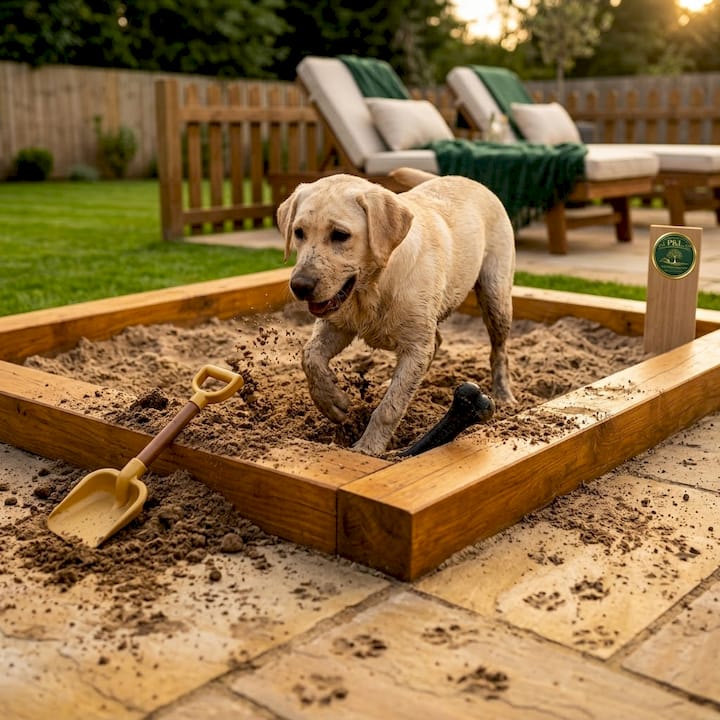
Border the pit with landscape timbers or pavers to define the edge clearly. Dogs respond well to physical boundaries they can see and feel. Place the dig zone away from the perimeter fence to eliminate any connection between digging for fun and digging to escape.
5. Dog wash stations
A dog wash station is one of those features that sounds like a luxury until you have used one. After that, you wonder how you managed without it.
The basic setup involves a sloped concrete or paver pad with a central drain, a wall-mounted handheld sprayer connected to a standard hose bib, and a non-slip surface texture. Keep the pad at least 4 feet by 5 feet so you have room to work around a larger dog. A hook or ring mounted at nose height lets you secure a leash during washing.
Position the station near a side gate or back door so you can move a muddy dog from yard to wash station without tracking dirt through the house. That single placement decision saves more cleanup time than any other design choice.
6. Pet-safe plants and plant buffers
Your plant selection matters as much as your hardscape choices. Cocoa bean mulch is toxic to dogs and should never be used in a pet-accessible yard. Standard wood chip mulch is safer but can cause digestive issues or paw irritation if your dog chews or walks through it repeatedly. Cedar mulch is a better default for pet yards.
For plants, stick to ASPCA-verified non-toxic species. Safe options include:
- Rosemary
- Catnip (excellent for cat-friendly outdoor spaces)
- Sunflowers
- Snapdragons
- Creeping thyme (doubles as ground cover)
Avoid azaleas, sago palms, foxglove, and oleander. These are common landscaping plants that are genuinely dangerous to pets.
Raised garden beds at 18 inches or higher deter most dogs from entering. For persistent diggers, add chicken wire or a layer of decorative rocks around the base. This keeps your garden intact without requiring a full fence around every bed.
For guidance on which mulch types work best in Northern Virginia yards while keeping pets safe, Ploutdoorva's mulch selection guide is worth reviewing before you buy.
7. Shade structures and cooling features
Heat management is one of the most overlooked elements of backyard safety for pets. Dogs and cats cannot regulate body temperature as efficiently as humans, and a yard without adequate shade becomes dangerous on summer afternoons.
Natural tree canopy is the best shade solution because it also cools the surrounding air through transpiration. If your yard lacks mature trees, a pergola with a shade cloth or polycarbonate panel roof gives you reliable afternoon coverage. Shade sails are a lower-cost option and can be repositioned seasonally.
Shade coverage is not just about comfort. For pets on artificial turf, shade between 10 a.m. and 4 p.m. is the difference between a safe surface and one that causes paw burns. Plan your shade placement before you finalize your surface choices.
For water access, automatic pet waterers mounted to a fence post eliminate the problem of tipped bowls. Splash pads with a simple on/off valve give dogs a way to cool down independently. A shallow kiddie pool works well for water-loving breeds, though it requires weekly draining and cleaning to prevent bacterial growth.
8. Tailored features by pet type and climate
Not every yard needs every feature. What you prioritize depends on your pet's breed, size, behavior, and where you live.
For large or high-energy dogs: Prioritize the run zone and a long, clear path. These dogs need sustained movement, not just a patch of grass. Add agility elements like low jumps or weave poles if your dog is trained for them.
For dogs with allergies or skin sensitivities: A grassless yard is worth serious consideration. Grassless alternatives reduce exposure to pollen, fertilizers, and pesticides that trigger reactions. Pea gravel is a particularly good fit because it drains well and stays cool.
For cats: Cat-friendly outdoor spaces work best with vertical elements. A catio, which is an enclosed outdoor cat enclosure attached to the house, gives cats fresh air and stimulation without the escape risk. Add climbing shelves, perches, and tunnels for pet enrichment ideas that keep indoor cats engaged safely outdoors.
For hot climates: Shade and water features move from optional to required. In USDA zones 7 and above, plan for shade coverage over any hardscape surface your pet uses regularly.
Pro Tip: If you have multiple pets with different needs, design zones that serve each animal independently. A run zone for your dog and a shaded perch zone for your cat can coexist in the same yard with thoughtful layout planning.
For smaller properties, small backyard landscaping ideas from Ploutdoorva show how to fit multiple functional zones into a compact footprint without sacrificing usability.
My honest take on what actually works
I have worked on enough outdoor spaces to say this clearly: most pet owners design their yards for themselves first and their pets second. Then they spend years retrofitting features to fix problems that were predictable from the start.
The 90/10 rule is real. Ninety percent of your pet's well-being comes from training and stimulation, and only ten percent from environment. But that ten percent compounds. A well-designed environment makes the other ninety percent easier to manage. When your dog has a designated dig zone, they stop digging up your garden. When your cat has a catio, they stop scratching at the door to get outside unsupervised.
The mistake I see most often is skipping the perimeter and jumping straight to the fun features. A splash pad means nothing if your dog escapes through a gap in the fence. Get the perimeter right first, then build inward.
The second most common mistake is choosing surfaces based on appearance alone. I have seen beautiful artificial turf installations that were completely unusable on summer afternoons because no one accounted for shade. Surface temperature management is not a detail. It is a foundational design decision.
Plan for your pet's actual behavior, not the idealized version. If your dog digs, build a dig zone. If your cat climbs, add vertical features. A well-planned pet environment reduces problem behaviors without requiring constant intervention. That is the real value of getting the design right from the start.
— Victor
Ready to build your pet-friendly backyard?
Planning pet-friendly backyard features on paper is one thing. Getting the installation right, from dig-proof fence foundations to properly drained wash stations, requires precision and experience.

Ploutdoorva specializes in custom outdoor living spaces built for real life, including yards designed around your pets' specific needs. Every project includes free 3D design renderings so you can see the full layout before a single shovel hits the ground. On-site owner supervision and a two-year workmanship warranty mean you get exactly what you planned, with no surprises on the final bill. If you are ready to turn your backyard into a space that works for your whole family, connect with the team at Ploutdoorva through their outdoor living contractor page to get started.
FAQ
What are the most important pet-friendly backyard features?
Secure perimeter fencing with dig-proof foundations, a designated shade zone, and safe ground surfaces are the three highest-priority features for any pet-friendly yard. Everything else builds on this foundation.
Is artificial turf safe for dogs?
Artificial turf is safe for dogs when it is shaded during peak sun hours. Turf in full sun retains enough heat to cause paw burns in warm climates, so shade coverage between 10 a.m. and 4 p.m. is required.
What plants are safe for a pet-friendly backyard?
ASPCA-approved options include rosemary, sunflowers, snapdragons, and creeping thyme. Always avoid azaleas, sago palms, and oleander, which are toxic to both dogs and cats.
How do I stop my dog from digging up the yard?
Build a dedicated dig pit filled with play sand and loose topsoil, at least 4 feet by 4 feet and 18 inches deep. Bury toys in it during training to redirect your dog's instinct to an approved location.
Can I create a cat-friendly outdoor space in a small backyard?
Yes. A catio, which is an enclosed outdoor enclosure attached to your home, works well in compact yards and gives cats safe outdoor access with climbing shelves, perches, and tunnels for enrichment.